Fort Lauderdale Waterfront Market: Trends and Signals
December 4, 2025
December 4, 2025
Is the Fort Lauderdale waterfront market running hot or cooling quietly beneath the surface? When you are eyeing oceanfront, Intracoastal, or canal-front homes, signals can be mixed and easy to misread. You want clarity that helps you time your move and negotiate with confidence. In this guide, you will learn how to read waterfront-specific metrics like inventory, months of supply, days on market, and list-to-sale dynamics so you can act with certainty. Let’s dive in.
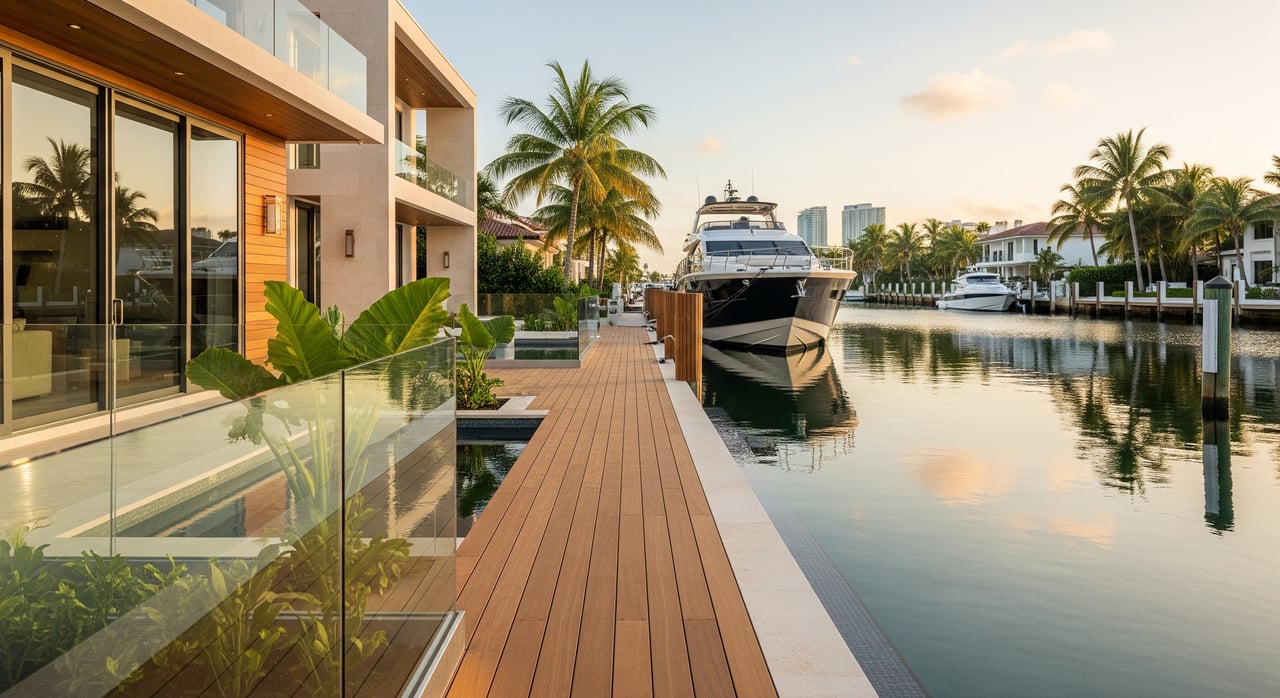
Waterfront in Fort Lauderdale is not one market. It includes oceanfront property on the barrier island, Intracoastal and bayfront homes, canal-front single-family homes, riverfront along the New River and Middle River, and a wide range of waterfront condos and marina buildings. Each segment has its own buyer pool and price rhythm.
Demand is driven by usable water access, boat-friendly docks, and views. Seasonal buyers often arrive in winter from colder regions, which adds a predictable cycle. At the same time, broader forces like interest rates, insurance costs, and migration into Florida shape how active buyers feel.
Supply is limited because waterfront parcels are finite, and ownership changes hands less often. Permitting, seawall requirements, and higher maintenance costs for coastal property also keep turnover lower. Risk and cost are real factors too. Flood exposure, sea-level trends, and hurricane risk influence insurance and lending. You can review local flood zones via the FEMA Flood Map Service Center to understand your property or a target area’s baseline risk, and explore local sea-level trends through NOAA’s tide gauges for long-term context. Insurance market shifts at the state level can also impact affordability and momentum; track updates from the Florida Office of Insurance Regulation to stay informed.
Inventory is the count of active listings. Months of supply (also called absorption) is active inventory divided by the average number of homes sold per month. As a rule of thumb, less than four months suggests a seller’s market, four to six months is balanced, and more than six months leans buyer-friendly.
For waterfront, you should always segment by property type and price band. A canal-front home in the 1–3 million range behaves differently than an ultra-luxury oceanfront estate. Luxury often carries higher months of supply because the buyer pool is smaller. If months of supply is rising, that can signal cooling demand or overpricing. If it is falling, expect faster deals and, at times, multiple offers on well-positioned properties with strong boating features.
Days on market (DOM) tracks how long a listing takes to go under contract. Waterfront DOM is often longer than non-waterfront because buyers are more selective. The distribution matters. You might see a cluster of quick sales for well-priced homes with deep-water dockage, while others linger due to condition, location on the waterway, bridge limits, or seawall issues.
When DOM shortens while inventory also declines, pricing pressure tends to build. If DOM increases while inventory stays flat, buyers may be pushing back on price or pausing to evaluate insurance and flood costs.
The list-to-sale price ratio (LP%) compares the final sale price to the original list price. It helps you see pricing accuracy and negotiation dynamics. In a tight micro-market, a well-priced home with direct ocean access and quality docking often sells at or above list. In a slower stretch, LP% can slip as sellers adjust expectations and concede through reductions or closing credits.
Watch original list price versus the last list price at contract. A strong LP% off the final list can still hide meaningful reductions from the original ask.
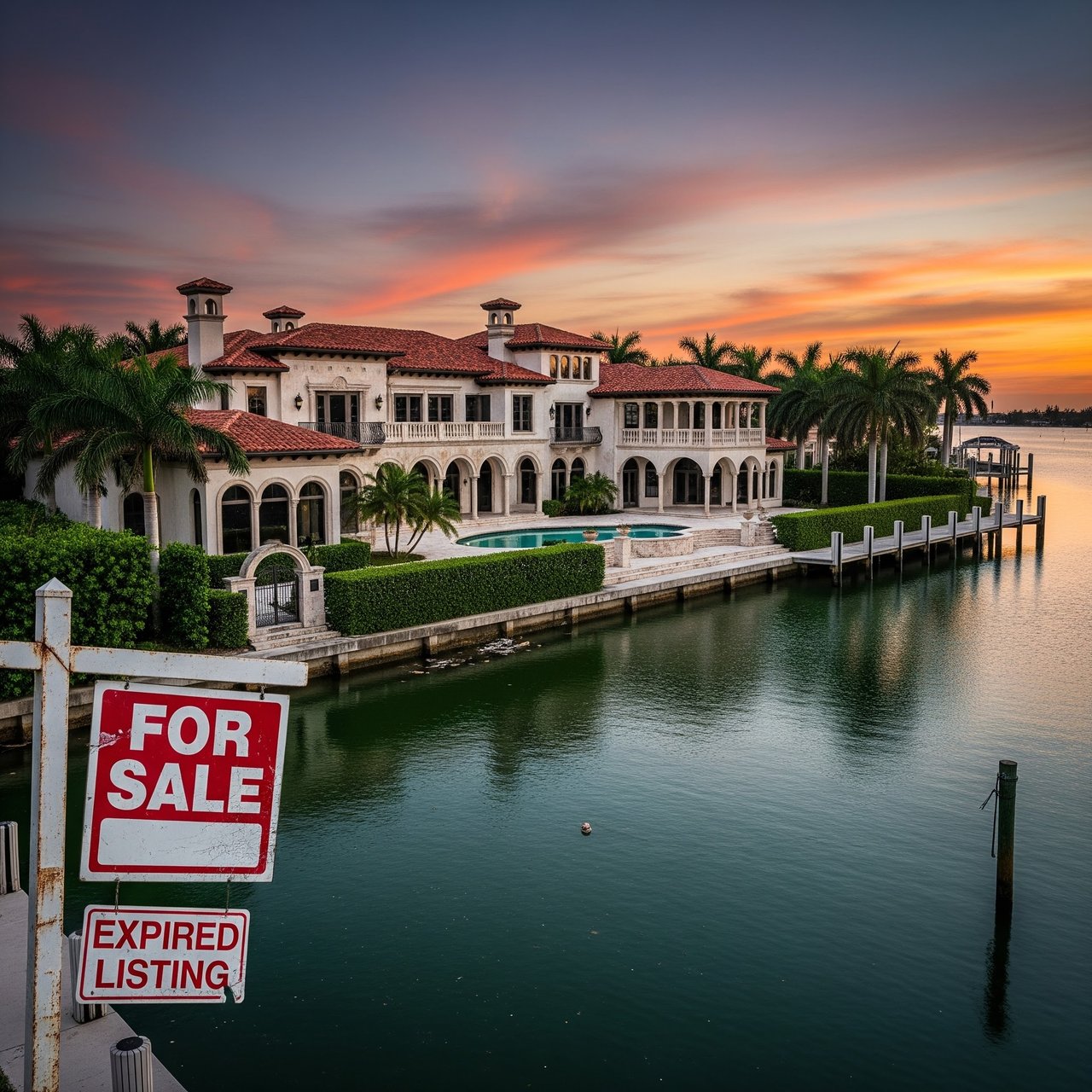
Price reductions show how often sellers adjust on the way to a contract. Expired and withdrawn listings point to overpricing, unresolved condition issues, or lack of fit for the buyer pool. A helpful indicator is the pending-to-new-listing ratio. When many new listings go pending quickly relative to what comes to market, momentum is building.
Look for patterns. Repeated reductions paired with rising expired counts can signal structural mismatches, like inadequate dock depth or aging seawalls. A high pending-to-new ratio in one price band can point to a short-term seller advantage.
Waterfront deals often take longer to close. Specialized inspections for seawalls and docks, permit verification, surveys, and elevation certificates add time. If you notice a large number of pending listings aging without closing, it can be a sign of financing friction, appraisal challenges, or insurance delays.
Split the market into sub-million, 1–3 million, and above 3 million. Buyer pools and absorption differ across these brackets. You may see brisk absorption in mid-tier canal-front homes while ultra-luxury oceanfront moves more slowly with higher months of supply.
Neighborhoods vary in waterway characteristics and buyer expectations. Las Olas Isles and Rio Vista canal systems tend to draw active boaters who value depth and clearance. Harbor Beach typically sits at a higher price tier. Corridors near Victoria Park and along the Middle River have their own rhythms. Treat each micro-market as its own segment and compare metrics side by side.
Fort Lauderdale often sees listing activity pick up in late summer and fall, ahead of the winter season when many out-of-area buyers arrive. Closings can cluster in winter months. To avoid mistaking seasonal swings for structural shifts, compare the same month year over year and use rolling 6–12 month windows. This smooths short-term noise and helps you focus on true changes in demand.
Seawall condition and documented permits matter. Homes with engineered or recently rebuilt seawalls tend to command premiums and move faster. Dock type, legal permits, and channel depth determine how usable the water access is. Always confirm these details through public records and permits. The Broward County Property Appraiser provides parcel-level information that can support your property review.
Flood zones, base flood elevation, and wind coverage shape both financing and monthly costs. Before you write an offer, check the FEMA Flood Map Service Center to confirm the flood zone and review any elevation data available. For long-term context on coastal water levels, consult NOAA’s local tide and sea-level resources. Because insurance markets evolve, keep an eye on updates from the Florida Office of Insurance Regulation. Changes in availability or premiums can quickly affect buyer behavior and pricing power.
For waterfront condos and townhomes, HOA rules can limit boat storage, guest dock use, and rentals. Short-term rental policies in the city and county also influence investor demand. Verify building documents, rules, and any rental licensing requirements early so you can price and plan accurately.
Segment precisely. Break the waterfront into 4–6 segments by water type, price band, and neighborhood. Treat each as its own mini-market.
Build a baseline. For each segment, track 12-month rolling metrics for inventory, monthly sales, months of supply, median DOM, list-to-sale ratio, and price-reduction rate.
Flag short-term moves. Compare the latest 3 months to your 12-month baseline. Mark changes greater than about 10–15 percent.
Cross-check. Confirm a move across at least two metrics. For example, months of supply rising along with a higher reduction rate is a stronger signal than one metric moving alone.
Investigate causes. Consider seasonality, new listing waves, insurance news, or permitting changes. Sometimes an external event explains a sudden shift.
Decide on action.
When you read months of supply, DOM, and list-to-sale ratio in context and at the right level of detail, the Fort Lauderdale waterfront becomes much clearer. By segmenting the market, checking more than one indicator, and weighing seawall, dock, flood, and insurance factors, you can set smart expectations and act decisively.
If you would like a calm, data-guided read of your specific waterfront segment and a tailored plan to buy or sell with confidence, connect with Gail Kennell for a one-on-one conversation.
Discreet Horizons is the forensic intelligence arm of Sea Crown Estates. In an era of increasing transparency and shifting coastal codes, we provide the situational awareness required to protect coastal legacies.



The Singular Mandate
The Expired Asset

Sea Crown Estates

Sea Crown Estates

From Inquiry Through Closing

The Sovereign Alternative
Specializing in luxury real estate, Sea Crown Estates delivers discreet, white-glove service with curated listings, expert insights, and a bespoke approach tailored to every client’s vision.