
Florida Domicile Intent vs. the 183-Day Residency Myth
November 21, 2025
November 21, 2025
The 183-day rule is the most widely repeated, yet often dangerously misunderstood, piece of advice in UHNW tax migration. Many believe that simply spending six months and one day in Florida automatically grants tax-free domicile. This is a perilous simplification. For the high-net-worth individual facing aggressive residency audits from high-tax states like New York or California, domicile is proven by intent and documentation, not just a day count.
The "183-day rule" is a tool used primarily by the state you are leaving to claim you as a statutory resident for tax purposes.
The Risk: If you spend 183 days or more in your former high-tax state and maintain a "permanent place of abode" there (even a long-term lease or part-time residence), that state can legally subject 100% of your worldwide income to their state income tax—regardless of your intent to live in Florida.
Florida's Rule: Crucially, Florida itself has no minimum day requirement to establish domicile. You become a Florida resident the moment you form the intent to make it your one, true, fixed, and permanent home.
Therefore, the 183-day count is a sword held by your former state to tax you, making your primary strategic goal not to exceed 182 days outside of Florida in any high-tax jurisdiction.
Successfully defending your Florida domicile in an audit requires a comprehensive, overwhelming paper trail that proves your life's center has irrevocably shifted south. This is where the choice of property and the actions surrounding its acquisition become critical.
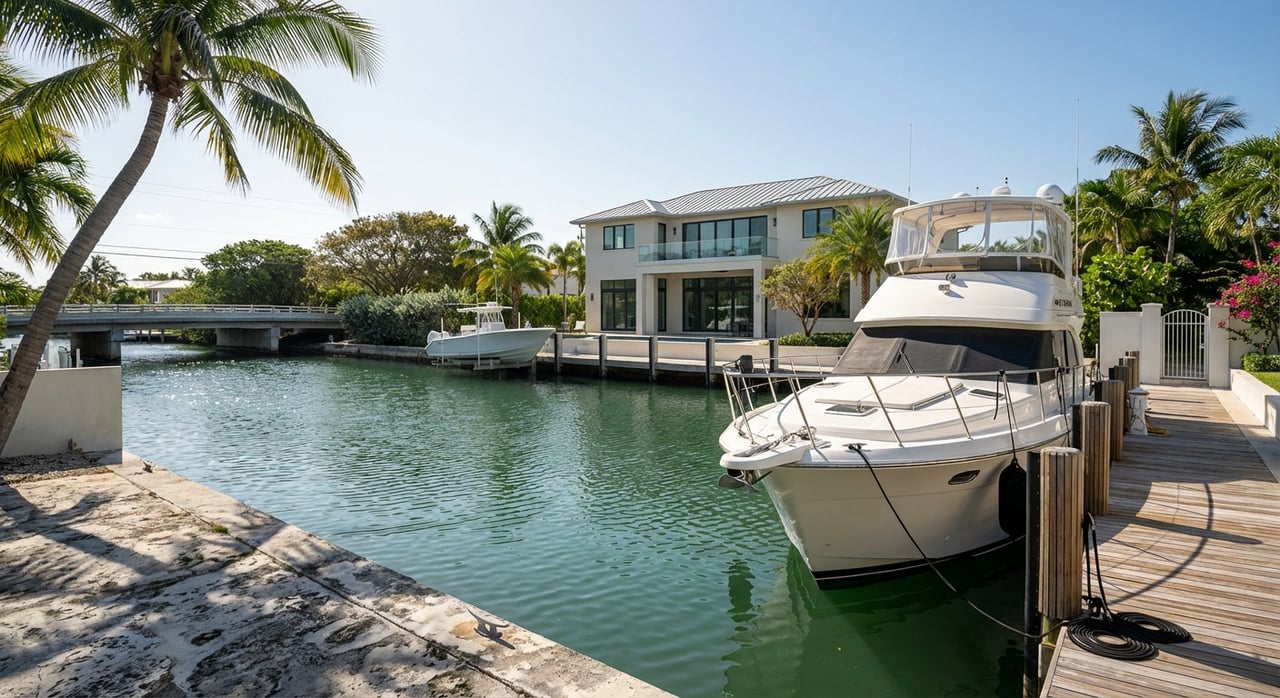
For the UHNW client, the purchase of a trophy home in a strategic enclave (like Palm Beach or Indian Creek) is the single most powerful act, but it must be supported by the "domicile checklist":
The Physical Asset (The Home): Your Florida residence must be commensurate with your lifestyle, often equal to or larger than your previous home. It should contain valuable, sentimental assets (art, family photos, heirlooms)—things you wouldn't keep in a temporary spot.
The Legal Declaration: File a Florida Declaration of Domicile with the Clerk of the Circuit Court in your county. This sworn statement formally establishes your intent to the public record.
The Hard Documentation: Immediately obtain a Florida Driver's License and transfer Vehicle and Watercraft Registration to the Florida address. Update your Voter Registration and officially notify your previous state's tax and voting authorities.
The Financial and Professional Severance: This is the audit goldmine. You must:
Change the mailing address on all bank, brokerage, and credit card accounts to Florida.
Sever ties with your former state's professional service providers (CPAs, lawyers, doctors) and establish new relationships in Florida.
Update your address on all legal documents, including your will, trusts, and power of attorney, naming Florida as your residence.
The Social & Civic Shift: Close memberships at high-profile clubs, gyms, and organizations in your former state and establish new, active memberships in Florida social, cultural, or philanthropic groups.
The choice of your primary residence is the largest piece of evidence you will present. A large, high-security estate in a discreet enclave like Jupiter Island signals an intent to build a permanent, generational life with a degree of physical presence that is difficult to dispute. Conversely, frequent travel from your former home and maintaining only a minimal Florida condo severely weakens your case.
For UHNW individuals, the 183-day rule is a boundary to avoid, while the Declaration of Intent—proved by the totality of your financial, civic, and physical actions—is the foundation of your defense.
The "183-day rule" is a widely misunderstood concept in establishing tax residency. Florida does not use this rule to grant domicile; rather, it is the standard used by high-tax states (like New York, California, and Illinois) to determine statutory residency. Spending 183 days or more in your former high-tax state while maintaining an abode there can subject your entire income to that state's tax, regardless of your intent to move.
True domicile (your permanent, primary home) is proven by demonstrating overwhelming intent to sever ties with the former state and establish new ones in Florida. The physical day count is a defensive measure to avoid your former state's statutory residency rule. Successfully establishing Florida domicile requires a holistic, meticulously documented transition of your legal, financial, and social life. Download your free copy, Domicile Defense Checklist Mandate
Important Disclaimer Gail Kennell and Sea Crown Estates are licensed Florida real estate brokers, not tax attorneys or CPAs. Nothing in this article constitutes tax or legal advice. All 1031 exchange and Delaware Statutory Trust strategies must be reviewed and approved by your own qualified tax and legal advisors before implementation.
At Sea Crown Estates, we provide Principal-Led Counsel and strategic access to our proprietary Vault of off-market assets, guaranteeing absolute discretion for every acquisition mandate.
For a confidential Asset Review and a detailed discussion on how your primary residence fits into your global wealth architecture, please contact:
Gail Kennell Principal Broker, Sea Crown Estates 📞 (954) 410-0162 📧 [email protected] 🌐 seacrownestates.com
Discreet Horizons is the forensic intelligence arm of Sea Crown Estates. In an era of increasing transparency and shifting coastal codes, we provide the situational awareness required to protect coastal legacies.



The Singular Mandate

The Expired Asset

Sea Crown Estates
Sea Crown Estates

From Inquiry Through Closing

The Sovereign Alternative
Specializing in luxury real estate, Sea Crown Estates delivers discreet, white-glove service with curated listings, expert insights, and a bespoke approach tailored to every client’s vision.